The coaching product, by what it does for you
A chess coach that knows your game, backed by the strongest engine and real chess books, that teaches the way a human coach does.
Not a pile of separate features. One coach doing the jobs a real coach does: it spots what is holding you back, plans what to work on next, teaches you how to think, and remembers everything. Other apps give you a fixed course to click through or a wall of numbers to read. None of them actually know your game and teach it back to you.
It knows you
Insights: what I see in your chess
What it does
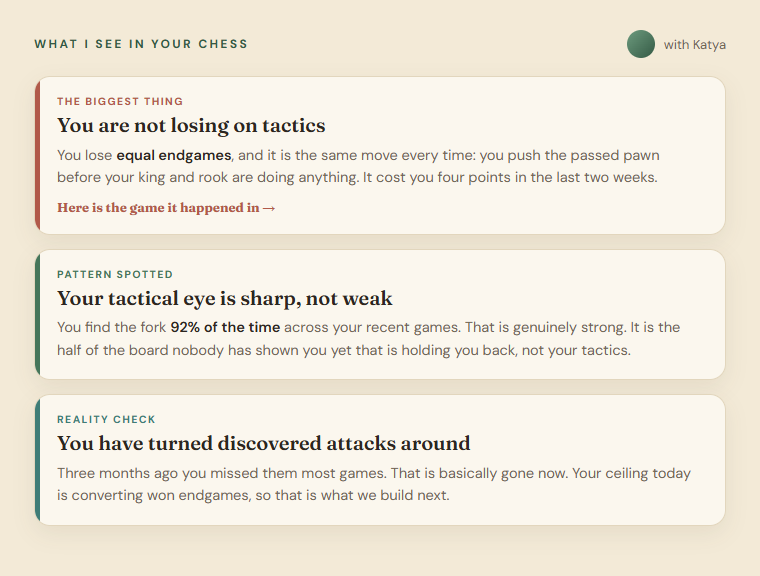
It reads every game you have played and tells you what it sees, the way a coach would, instead of just handing you numbers.
What you get
Not "endgame accuracy 62 percent" but "you are not losing on tactics, you lose equal endgames because you push the passed pawn too early, here is the game." It shows you the kind of player you are, how you are changing over time, and the one thing worth fixing next, with the proof on your own board.
What makes it different
Built
Other apps forget you between sessions and just describe what happened. This one tells you why, puts what matters most first, says it in your coach's voice, and ties every point to a real moment in your games, so it is not just making things up.
It plans your growth
The curriculum spine
What it does
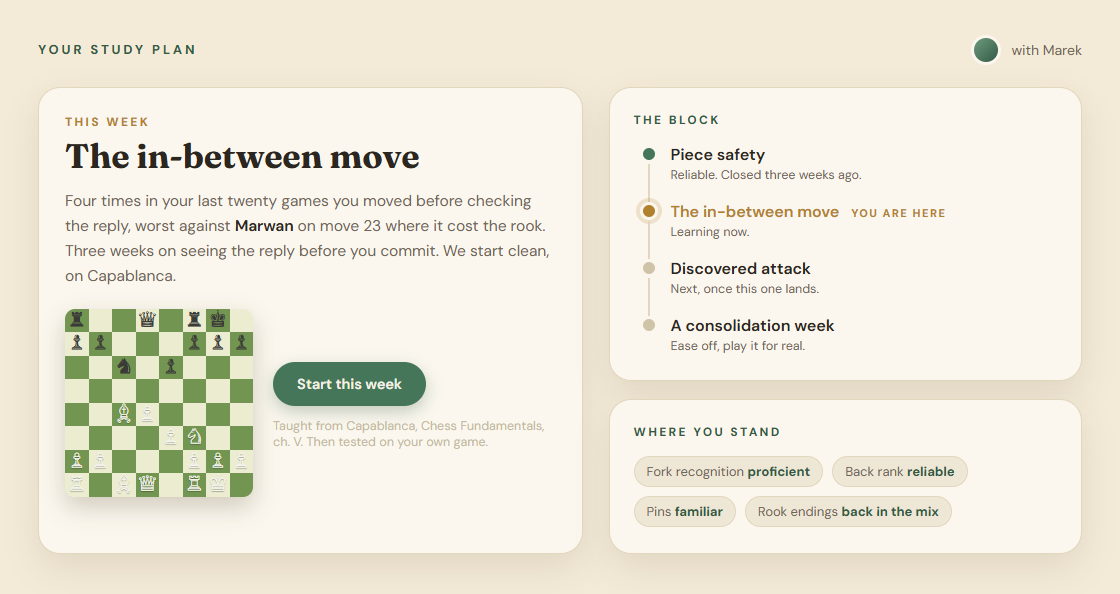
A living, co-authored plan voiced by a coach who knows you: built from your own games, ordered by real prerequisites, taught from real books, that remembers what you did three weeks ago and tells a story about where you are going.
What you get
One thing a week, chosen because your games are ready for it. The coach introduces you to the chess you have never seen, the endgame you never reach, the structure your openings filter out, before your opponent does. Taught clean from a master's game, then tested on your own.
What makes it different
Built
Everyone else hands you the same fixed syllabus. This is a plan written for you and changed as you improve, the kind of one-to-one coaching a real teacher gives that no off-the-shelf course can.
It teaches you how to think
Think it through
What it does
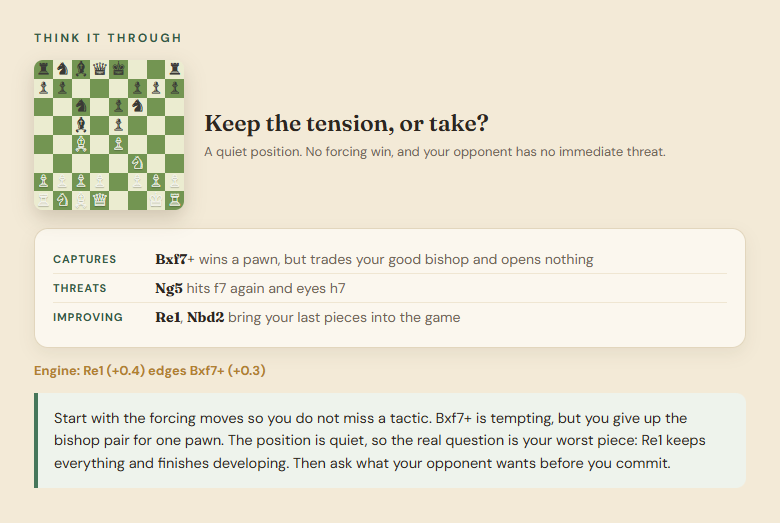
On any position, the coach walks the thought process: how to find a move, not just which move.
What you get
You learn the routine you are missing. What does my opponent want, what are my candidates (checks, captures, threats, then improving moves), what does each accomplish, and what kind of decision is this: attack or develop, hold the tension or capture, react or carry on with my plan. The hardest judgments, taught as judgments.
What makes it different
Built
A chatbot left to reason about chess on its own can make up moves and get them wrong, which teaches you a bad habit. Here the moves are real and the engine checks them, so the thinking holds up. An engine only shows you the best line and a course only gives you the answer; this teaches you how to choose.
It reviews your games, and talks it through
Reactive review and dialogue
What it does
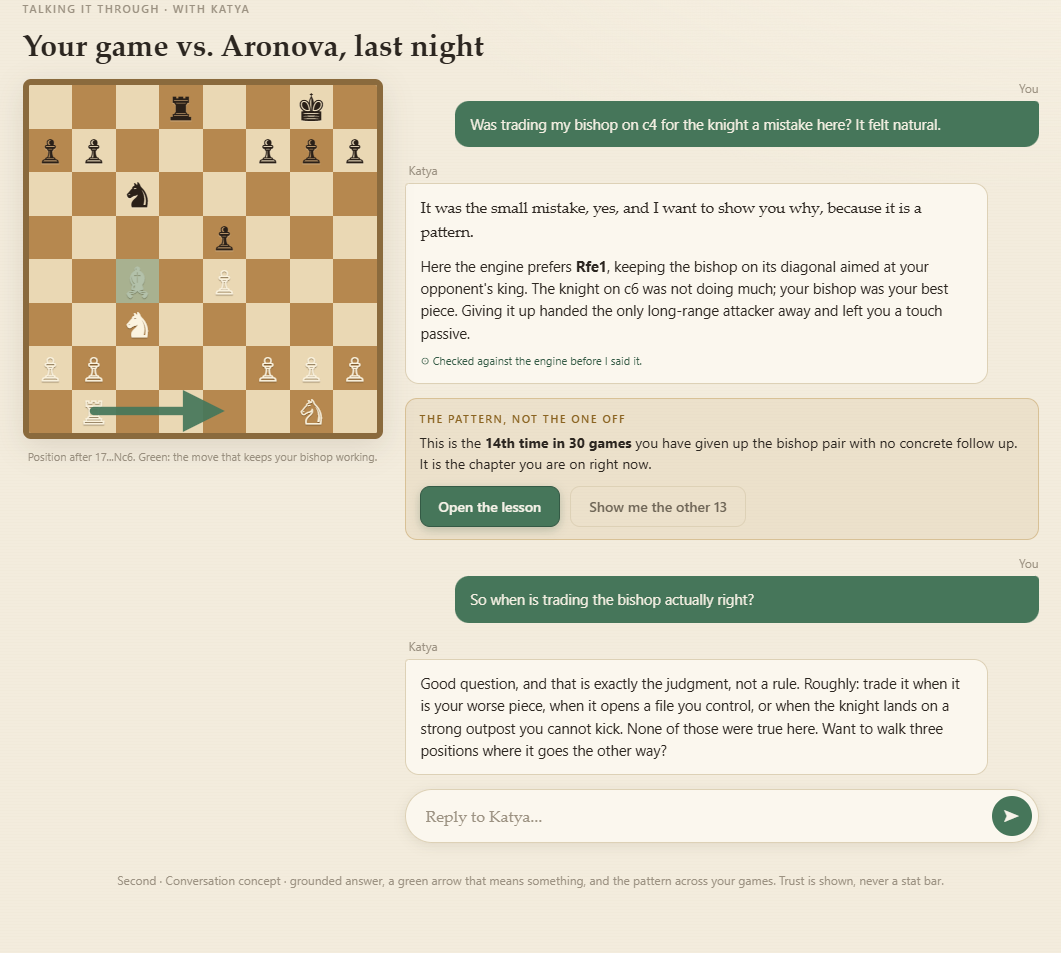
Your own games, your own mistakes, taught through your own positions, in a real coaching conversation.
What you get
A two-gear review: the coach narrates the calm stretches and stops you at the moments that decided the game. Plus open coaching chat grounded in your history, not generic advice.
What makes it different
Reactive built, dialogue in progress
Everything it tells you is checked by the engine and backed by real books, and it remembers your past sessions, so it builds on them instead of saying the same things again.
It hears you think
Think-aloud: the coach in the room while you play
What it does
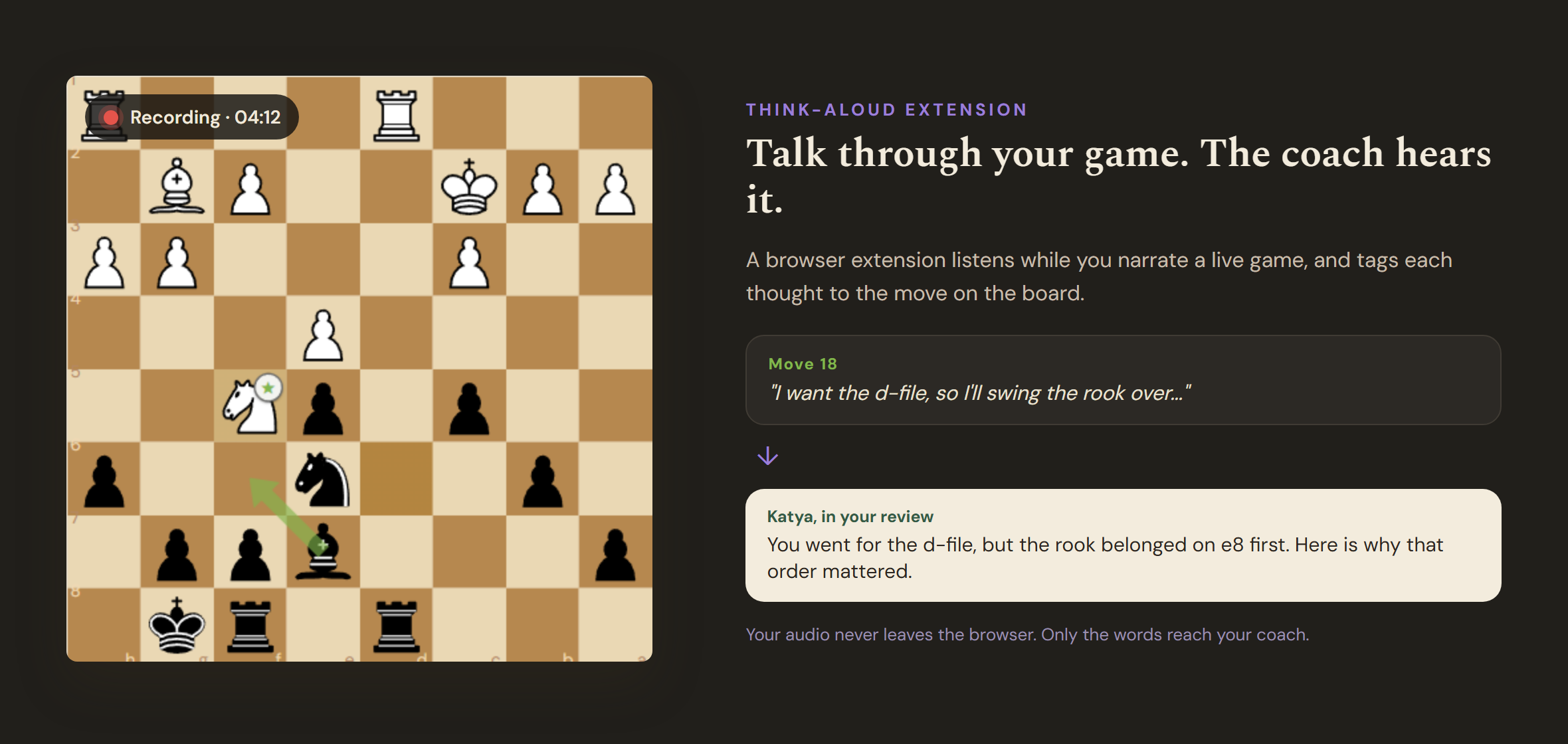
Talk through your thinking out loud while you play on chess.com. The browser companion transcribes it, tags every remark with the move on the board and how long you thought, and hands it to your coach after the game.
What you get
The debrief stops guessing what you were thinking, because you told it. The coach can put your own words next to the engine's truth: what you said you saw, three moves before what you missed.
What makes it different
Built · early pilot
No chess product on earth coaches your attention. It is strictly passive during play (it never analyses, suggests, or sends anything mid-game), and your words go only to your own machine.
The coach who notices
It speaks up before you ask
What it does
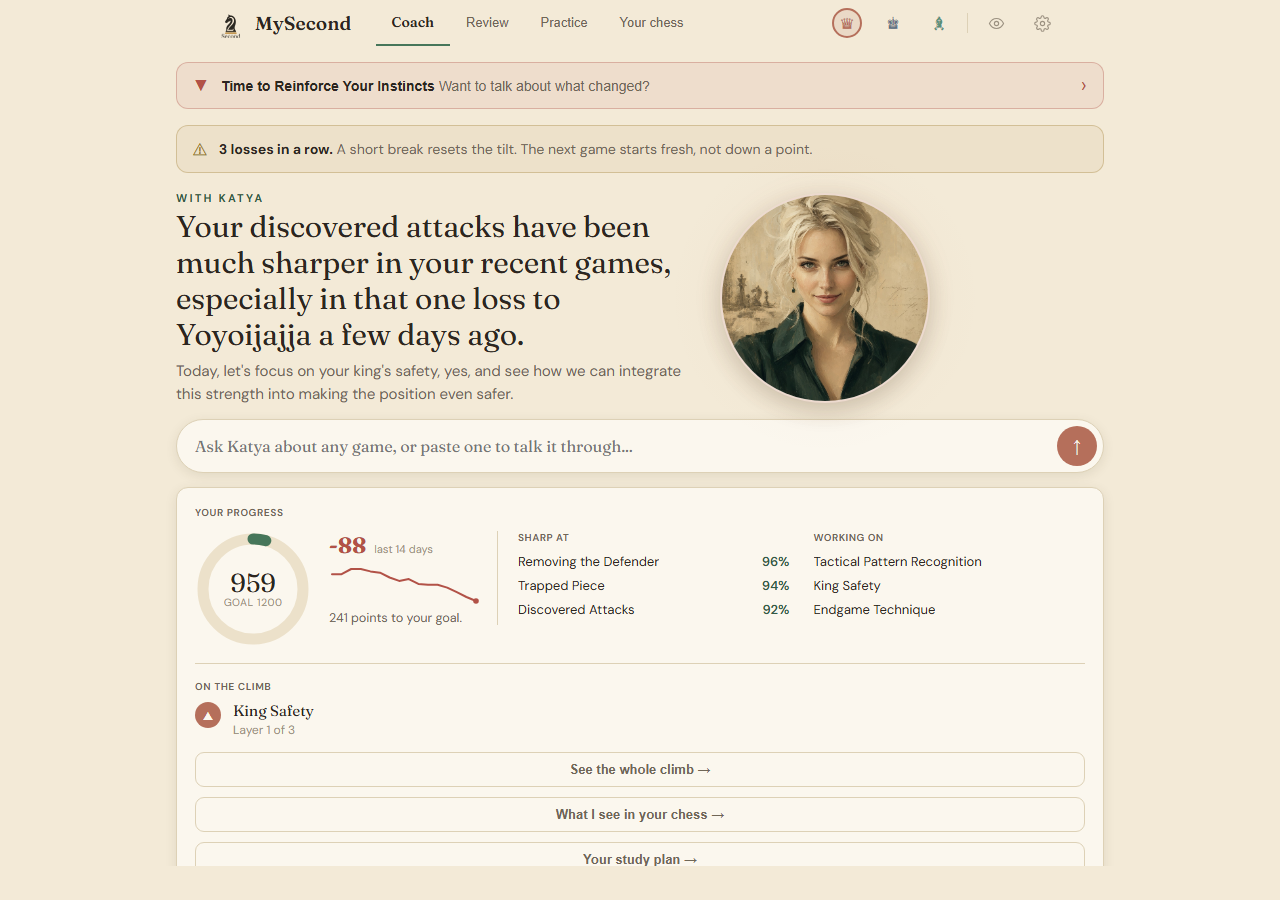
A rating slide, a tilt streak, a habit creeping back in: the coach notices on its own, says so in its own voice, and turns it into a tracked plan with a check-in when the data moves.
What you get
"Three losses in a row. A short break resets the tilt." Or: a slide diagnosed to its actual lever, a commitment, and a follow-up that re-measures and tells you honestly whether it worked.
What makes it different
Built
Dashboards wait to be read. A coach starts the conversation, remembers what you agreed, and closes the loop. This is the difference between a stats site and someone in your corner.
It builds your practice
Drills from your games, puzzles tuned to your leaks
What it does
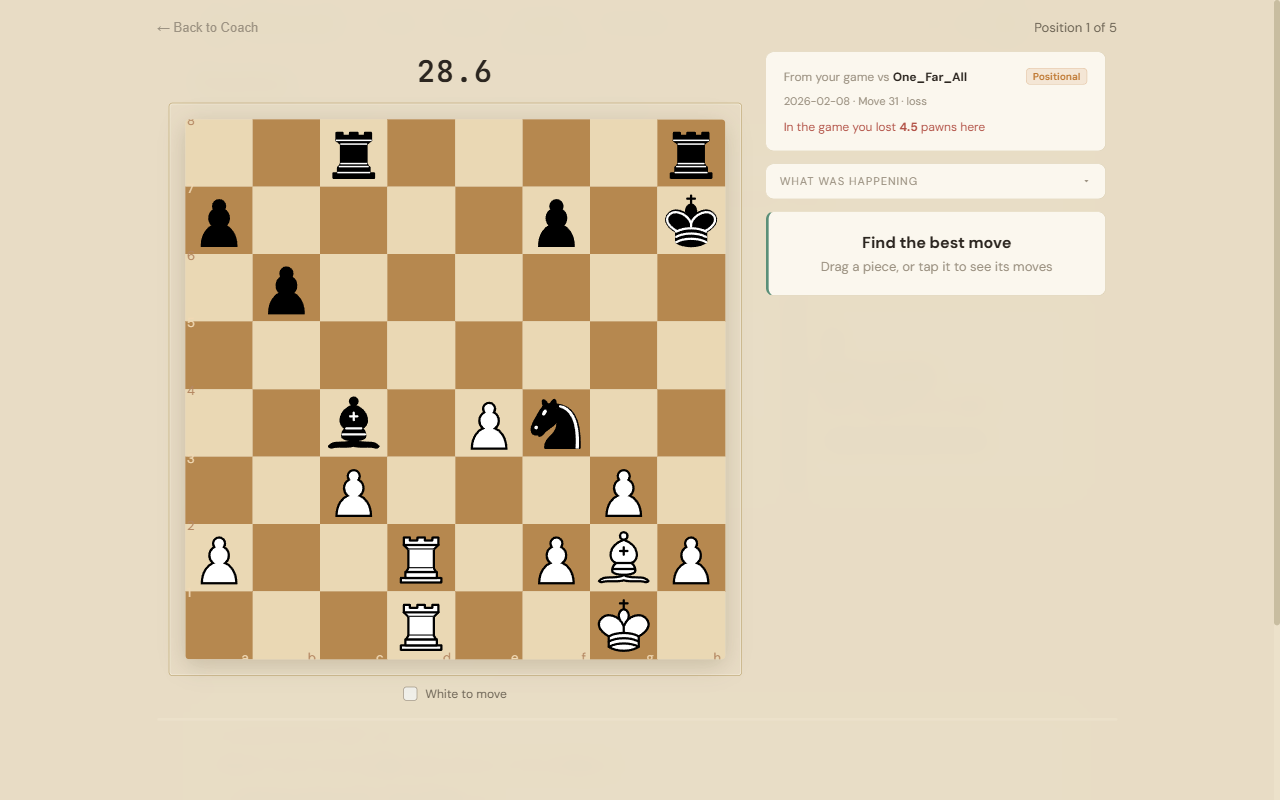
Thousands of tactical moments from your own archive become drills; nearly six million verified puzzles are filtered to your rating and the themes your games show you missing, never repeating; spaced repetition brings concepts back exactly when you are about to forget them.
What you get
Practice that is never random: the position you failed last Tuesday, back on the board until it is a reflex. Plus an opening trainer built from your own repertoire, play-the-coach when you have no games to import, and a study desk that walks any public Lichess study with your coach narrating, position by position, engine-checked.
What makes it different
Built
Puzzle sites give everyone the same firehose. This is homework from your own mistakes, assigned by a coach who watched you make them.
It studies with you
Walk any study with your coach
What it does
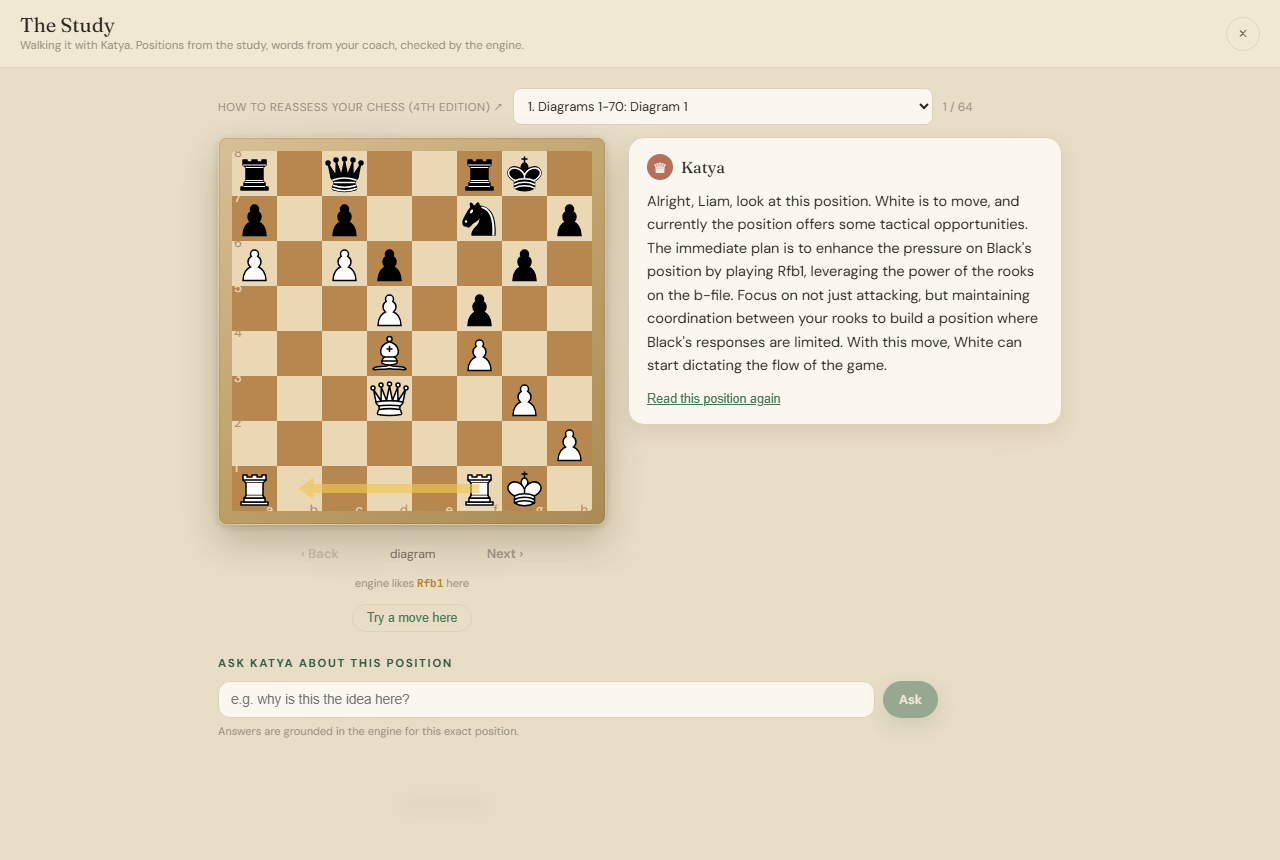
Paste any public Lichess study link and your coach walks it with you, position by position: what the position is about, why the next move is the idea, what the engine thinks, and an ask-anything box grounded in the exact board on screen.
What you get
The book-study experience with a patient teacher beside you. Try your own move and the coach tells you honestly how it compares. The study's positions, your coach's words, the engine's truth.
What makes it different
Built
Reading variations alone is where most study plans die. This turns any of the thousands of public studies into a guided lesson, and the coach narrating it is the same one who knows your games.
The truth underneath
Engine and books
What it does
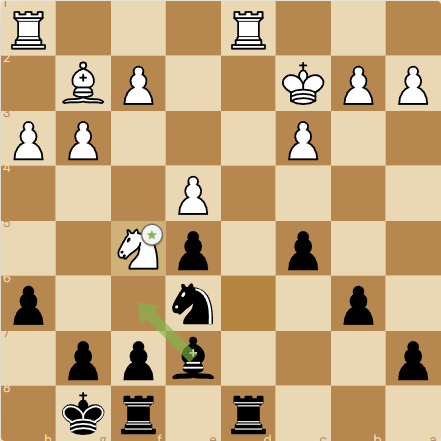
The coach never makes up the chess. The strongest engine ever built works out every evaluation, best move and line, and real chess books supply the teaching and the principle behind it.
What you get
What you are told is grounded, not guessed. The words are fresh every time, but they are built on a fact that has been looked up and checked, so the advice is specific to you rather than just confident-sounding nonsense.
What makes it different
Built
The test we hold ourselves to: a plain chatbot given only your moves should never out-coach this. The engine, the books, and your own history are what make sure it cannot.
Why this wins
Any chatbot can write convincing-sounding chess advice, and a lot of it can be quietly wrong in ways you might not catch. What makes this different is that it is built on your chess: checked by the engine, drawn from real books, tracked over time, and taught by a coach who actually knows your games. That is the coaching the best players have always had, and now you can too.